

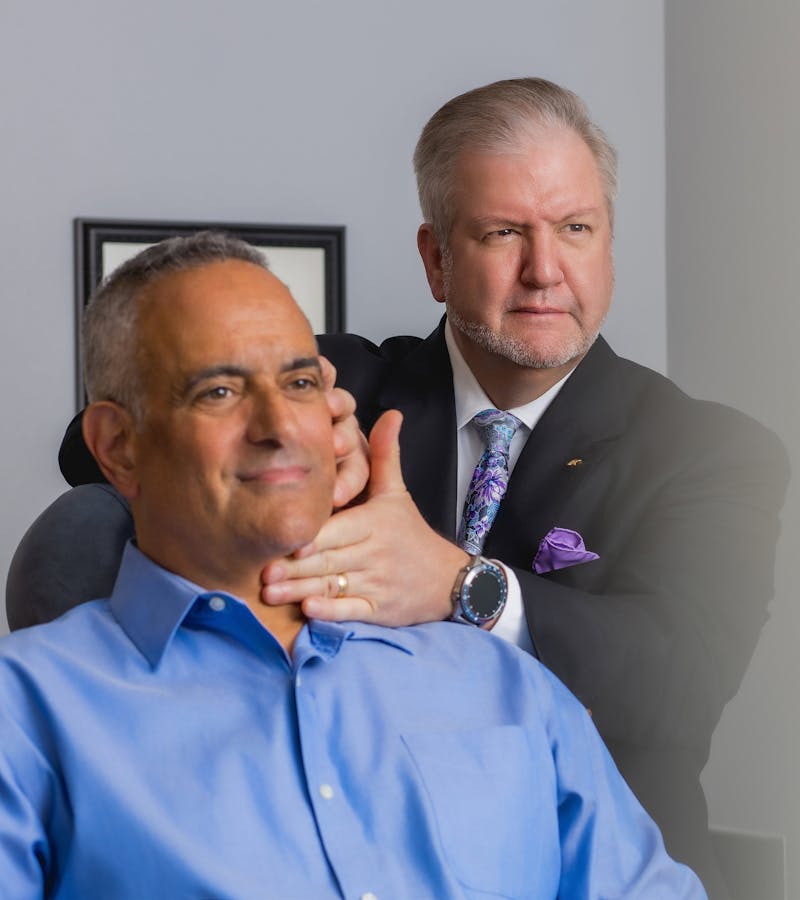
At Holcomb - Kreithen Plastic Surgery & Medspa, a 2025 Castle Connolly Practice Center of Excellence, facial rejuvenation is approached with a high level of precision and clinical depth. J. David Holcomb, MD, a double board-certified facial plastic and cosmetic laser surgeon, and Marc J. Salzman, MD, a board-certified, fellowship-trained plastic surgeon with over 30 years of experience, offer both advanced surgical and non-surgical solutions.
When comparing facial balancing and facelift surgery, the distinction is clear: facial balancing refines proportion and restores selective volume, while a facelift corrects structural aging such as sagging tissue, jowls, and neck laxity. Each serves a different purpose, and choosing the right one depends on what is actually causing the concern.
Here’s a closer look at how these approaches differ and when each is most effective.
What Facial Balancing Is Designed to Do
Facial balancing is a non-surgical strategy focused on improving overall facial harmony. Rather than treating isolated areas, it evaluates how features interact, then uses targeted treatments to enhance proportion. Patients with good skin elasticity often achieve meaningful improvement without surgery.
Facial balancing is commonly used to address:
- Mild volume loss: Restoring structural support in the cheeks, temples, or under-eye area.
- Profile imbalance: Refining the relationship between the chin, jawline, lips, and nose.
- Early aging changes: Softening lines and subtle descent before structural sagging develops.
- Asymmetry: Creating a more balanced and proportionate appearance across facial features.
When a Facelift Is the Better Option
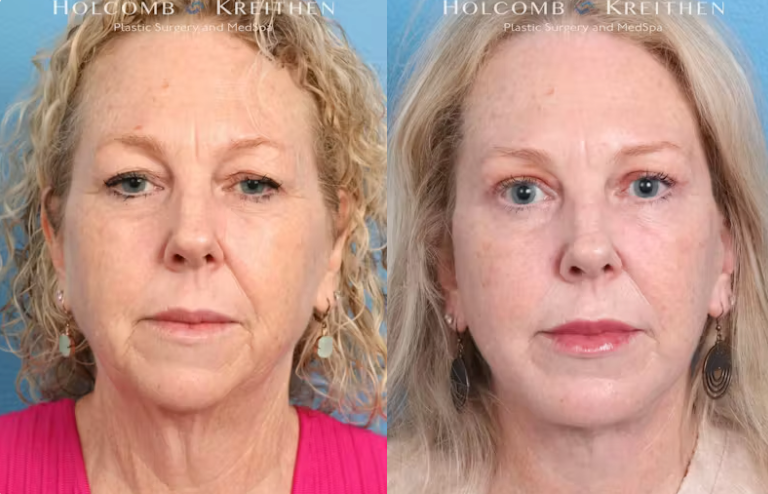
A facelift addresses changes that occur beneath the surface. When facial tissues descend, and skin loses elasticity, adding volume alone does not correct the problem.
At Holcomb - Kreithen Plastic Surgery & Medspa, facelift techniques are selected based on anatomy and goals. This may include vertical lifting of the SMAS, deep plane approaches, or energy-assisted techniques such as AccuLift™, which was co-developed by Dr. Holcomb. These methods allow for precise repositioning of tissue rather than simple tightening.
A facelift is typically recommended when you are noticing:
- Jowls: Blurring of the jawline caused by downward tissue movement.
- Neck laxity: Loose skin, fullness under the chin, or visible platysmal bands.
- Deep folds: Pronounced nasolabial or marionette lines driven by structural descent.
- Loss of facial shape: A shift away from a more defined, youthful contour.
When Combining Treatments Creates the Best Result
For many patients, the most natural outcome comes from layering treatments rather than relying on a single approach.
A facelift can restore structure to the lower face and neck, while complementary treatments refine the result. This is often where facial balancing techniques continue to play a role.
A combined plan may include:
- Laser skin resurfacing: Improving tone, texture, and overall skin quality.
- Targeted volume restoration: Enhancing areas not fully addressed by surgical repositioning.
- Collagen-stimulating treatments: Supporting long-term skin integrity and refinement.
This type of strategy allows each treatment to address a specific component of aging, resulting in a more complete and cohesive outcome.
Begin Your Facial Rejuvenation Plan
Choosing between facial balancing and a facelift requires an expert evaluation of your facial structure and goals. Dr. Holcomb and Dr. Salzman apply advanced surgical insight and aesthetic precision to determine the most effective approach for each patient. Schedule your private consultation in Sarasota or Tampa to receive a personalized treatment plan designed to deliver natural, long-lasting results.