Table of Contents

A Layer-by-Layer Approach to Neck Lift Surgery in Tampa

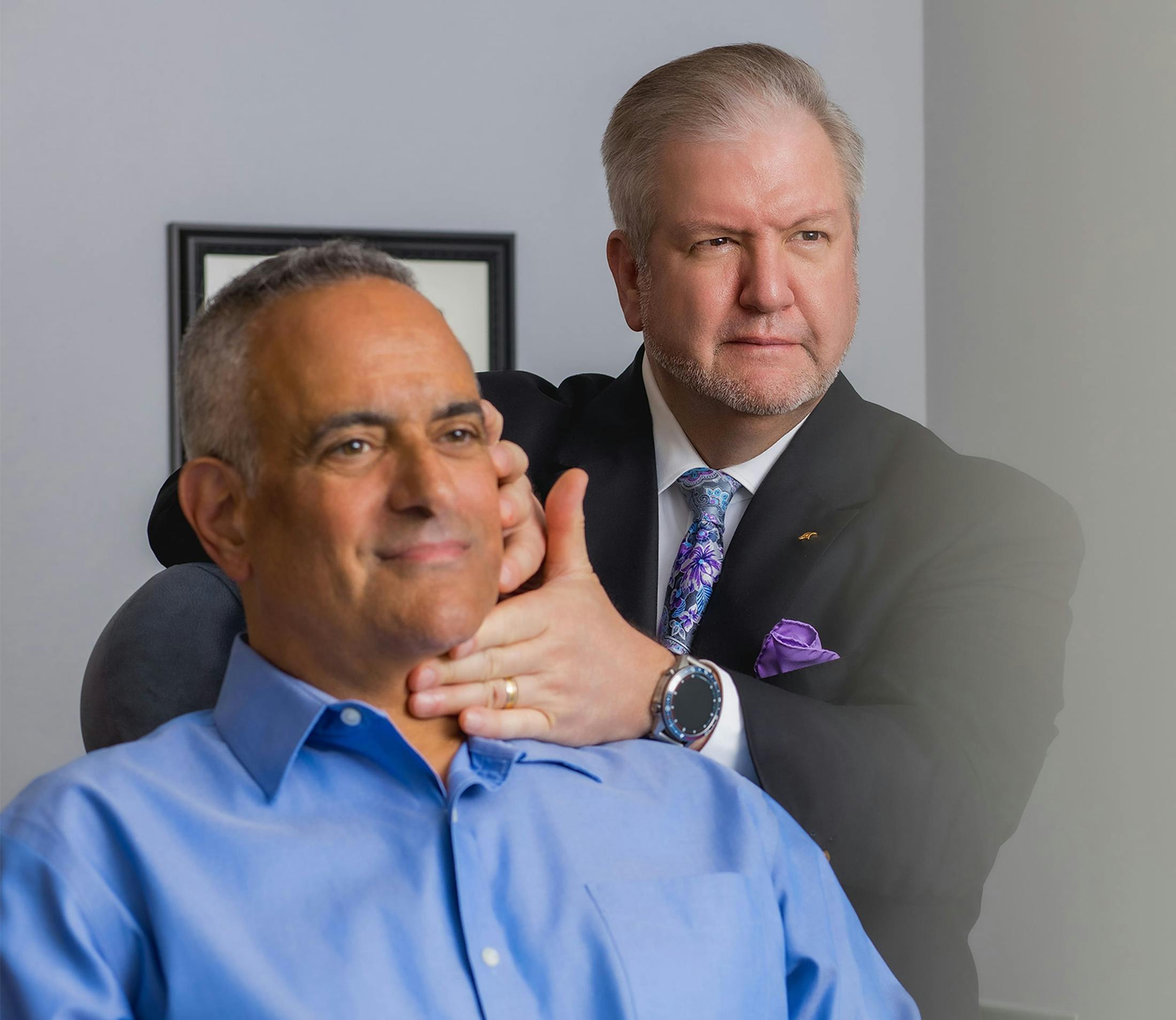
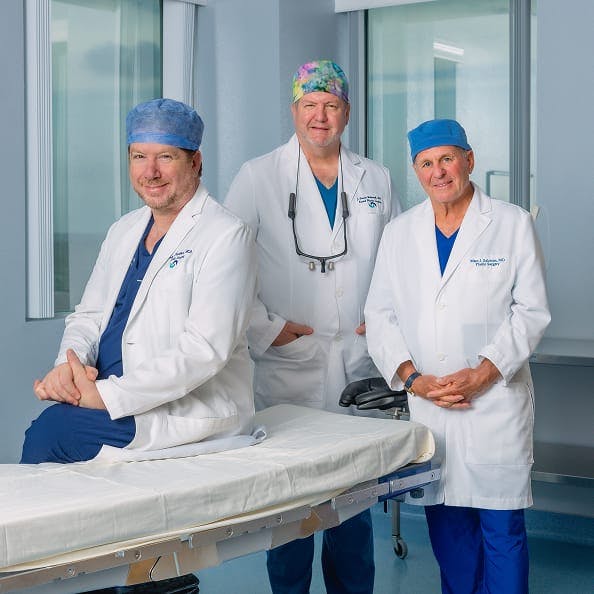
Double board-certified facial plastic surgeon Dr. J. David Holcomb and board-certified plastic surgeon Dr. Marc J. Salzman evaluate every layer before recommending a procedure.

That layered approach lets the treatment plan match the anatomy, from early fullness under the chin to advanced laxity and visible banding. The goal is a defined cervicomental angle, the crisp transition between chin and neck that frames a balanced profile. Consultations are available at our Tampa office in Carrollwood.

What Is a Neck Lift?

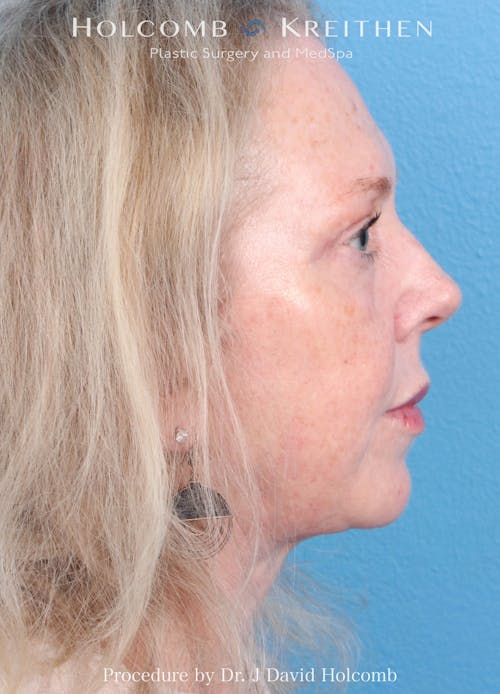
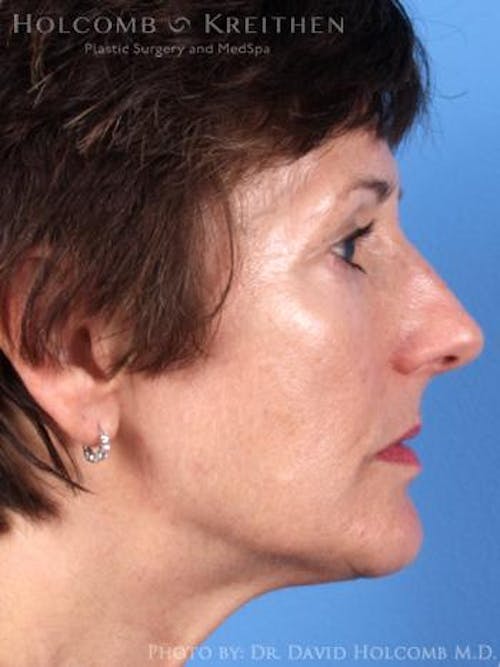
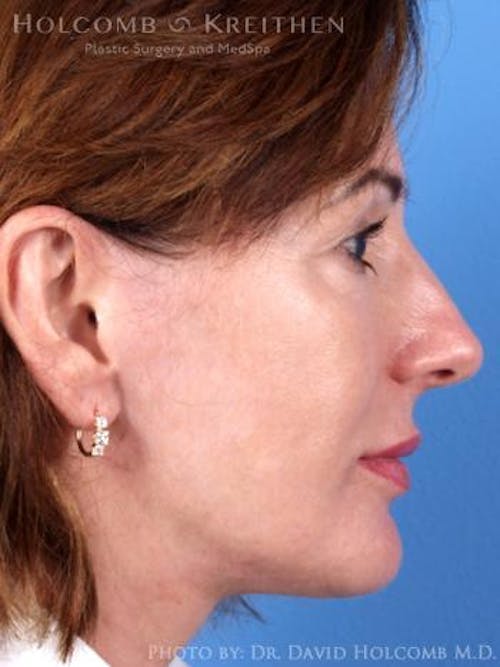
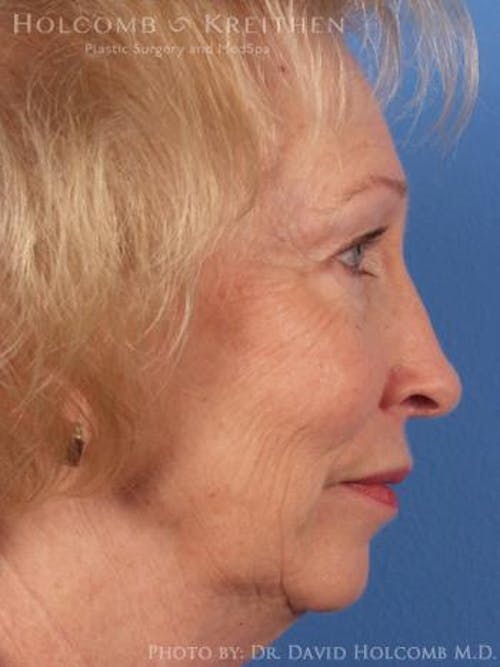
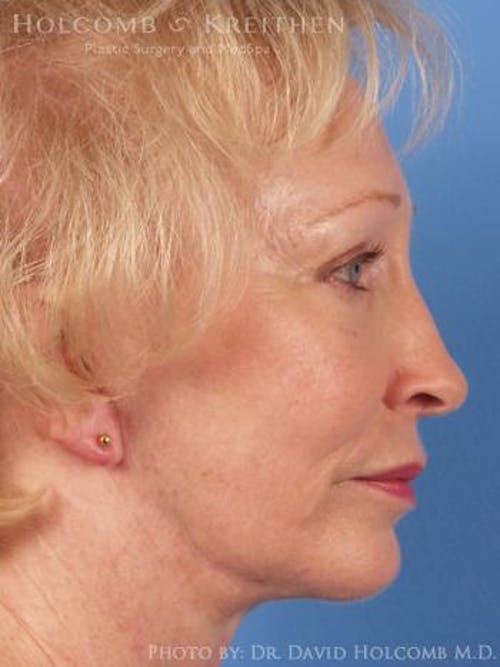
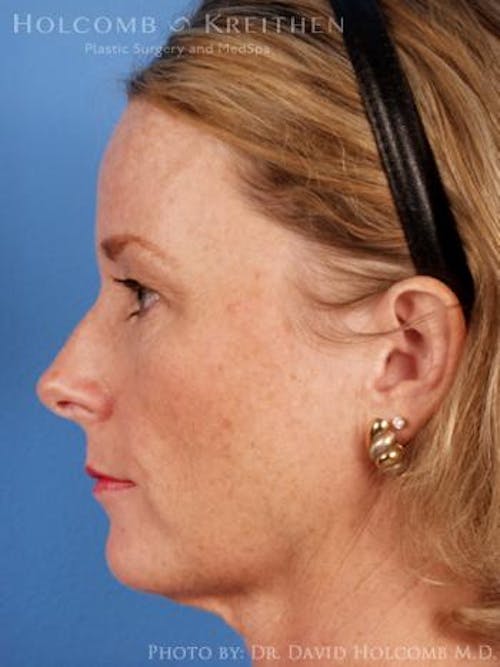
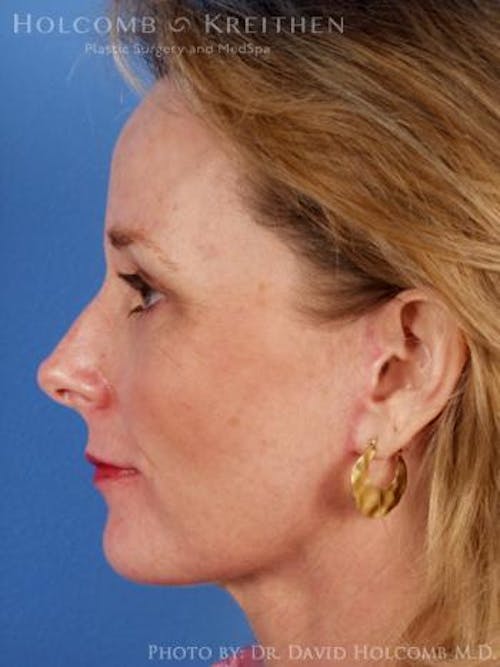
A neck lift, also called neck contouring, is a cosmetic procedure that refines the jawline and smooths out sagging or excess skin under the chin and neck. At our Tampa location, this procedure is commonly performed on its own or alongside complementary surgeries such as a facelift or chin augmentation.

Our surgeons use techniques that may include:

  • Liposuction to remove unwanted fat under the chin
  • Platysmaplasty to tighten the underlying neck muscle
  • Skin excision and repositioning to remove lax or sagging tissue
  • Laser-assisted contouring for precision sculpting

Banner media
asian woman with short hair smiling and looking in mirror

Why Consider a Neck Lift?

Over time, the neck is one of the first areas to show visible signs of aging. Factors like weight fluctuations, genetics, and gravity can all contribute to:

  • Loose, hanging neck skin ("turkey neck")
  • Softened or drooping jawline
  • Double chin or submental fullness
  • Prominent neck bands (platysma bands)
  • Loss of neck definition despite a healthy body weight

If these concerns are affecting your confidence, a neck lift may be an ideal solution.

Schedule a Consultation

Contact Us
Contact us media

Benefits of a Neck Lift

A neck lift provides significant benefits for a more youthful and refined appearance. Here are some key advantages:

  • Creates a more youthful and sculpted neck profile
  • Enhances jawline definition and reduces jowls
  • Restores skin firmness and tightens neck muscles
  • Can be combined with other procedures for a comprehensive rejuvenation
  • Many neck lift procedures can be performed under IV sedation, with minimal scarring

Types of Neck Rejuvenation Offered in Tampa

Submental Liposuction

  • Best for patients with good skin elasticity but stubborn fat beneath the chin
  • A small cannula is used to gently suction fat and refine the jawline

Laser-Assisted Neck Contouring

  • Using AccuSculpt or SmartLipo laser technology, this technique emulsifies fat and stimulates collagen, tightening the skin as fat is removed

Submentoplasty

  • Involves tightening the platysma muscle and removing small amounts of skin through an incision under the chin
  • Often paired with chin augmentation

Full Neck Lift

  • A more comprehensive option that may include liposuction, platysmaplasty, and surgical skin repositioning
  • Ideal for patients with more advanced laxity or "turkey neck"
Background media

Deep Neck Lift (Subplatysmal Work)

  • A deep neck lift treats the structures beneath the platysma muscle, where many heavy or blunted necklines actually begin
  • Depending on the patient's anatomy, this can include subplatysmal fat, the anterior bellies of the digastric muscles, and, in selected cases, the submandibular glands
  • Neither liposuction nor a standard platysmaplasty reaches these structures
  • That is why some patients still see fullness beneath the jaw after a more superficial procedure
  • A deep neck lift is typically considered when an obtuse neck angle persists despite a stable, healthy weight and reasonable skin tone

dock stretching out into the ocean

How to Prepare for Neck Lift Surgery

Preparing for a neck lift starts at least four weeks before surgery, and smoking cessation is the most time-sensitive step. According to MedlinePlus, most providers advise stopping cigarettes and tobacco at least 4 weeks before surgery. Extending that to at least 10 weeks further reduces the risk of problems.

The checklist below covers the key steps. The Holcomb–Kreithen surgical team will provide a complete pre-operative packet at your consultation.

Step

Timeline

What to Do

1

4+ weeks out (10 weeks is ideal)

Stop smoking and all nicotine products, including vapes and patches

2

As directed by your surgical team

Stop blood-thinning medications and supplements on the schedule your team provides

3

1 week out

Fill prescriptions, set up a recovery space with pillows for elevation, and ask about the VitaMedica Surgery Program

4

Day before

Confirm your ride and an adult to stay with you, and follow fasting instructions

5

Day of

Wear a loose, button-front top and skip makeup and jewelry. Patients who receive sedation must not drive for 24 hours

Neck Lift Before & Afters

View Gallery

Recovery After Neck Lift Surgery

After your neck lift in Tampa, you'll be able to return home the same day. Most neck lift procedures are performed in the practice's QUAD A (formerly AAAASF) accredited outpatient surgical suite.

Initial recovery takes about 10 to 14 days, and most patients avoid strenuous activity for 2 to 3 weeks. The table below outlines what most patients can expect week by week.

Timeframe

What to Expect

Activity Level

Days 1 to 7

Swelling and bruising peak, then begin to subside. A support garment may be worn to assist healing and minimize swelling, and early follow-up visits monitor progress.

Rest with head elevated; short, easy walks

Week 2

Most bruising has faded as the initial 10 to 14-day recovery window closes.

Many patients return to desk work within 7 to 10 days

Weeks 3 to 4

Residual swelling continues to settle. The neck may still feel tight or numb in places.

Strenuous activity restrictions typically lift around 2 to 3 weeks

Weeks 4 to 6

Most visible swelling has resolved, and tightness continues to ease.

Full exercise resumes with surgeon clearance

Months 3 to 6

Deeper swelling resolves and the final neck contour becomes apparent.

No restrictions

Up to 12 months

Incision lines mature, flatten, and fade.

Continue sun protection on scars

Full results appear as swelling continues to resolve over several weeks, revealing a defined, youthful neckline.

Sleeping Position After a Neck Lift

  • Sleeping on your back with your head elevated above your heart is recommended during early healing
  • Elevation helps limit swelling and bruising, and it keeps pressure off the incisions beneath the chin and around the ears
  • Many patients find that a wedge pillow or recliner makes this easier
  • Continue for as long as your surgical team advises

Caring for Your Incisions

  • Incision care focuses on keeping the treated areas clean, dry, and protected while they close
  • The Holcomb–Kreithen team provides written instructions for cleansing and for when to resume showering
  • They also explain which ointments to use, if any
  • Protect healing incisions from direct sun, which can darken scars as they mature
  • Report redness, warmth, drainage, or sudden one-sided swelling to our Tampa office right away

What Are the Risks Associated With Neck Lift Surgery?

As with any surgical procedure, a neck lift carries potential risks, including:

  • Temporary swelling
  • Changes in skin sensation
  • In rare cases, infection or asymmetry

Complications are uncommon when performed by a board-certified surgeon in an accredited facility. Our surgical center holds QUAD A (formerly AAAASF) accreditation and maintains rigorous safety protocols. Dr. Holcomb or Dr. Salzman will review all potential risks before your procedure.

One risk patients often ask about by name is marginal mandibular neuropraxia. This is a temporary weakness of the nerve branch that moves the lower lip. Changes in skin sensation involve sensory nerves, but the marginal mandibular branch is a motor nerve. When it is affected, the sign is an uneven smile rather than numbness.

In asystematic review of revision neck lift surgery published in Aesthetic Plastic Surgery, one 101-case series reported a 2% complication rate. That included one case of transient marginal mandibular nerve weakness and one hematoma. The review found no permanent nerve deficits across 188 revision cases.

The rates below come from a systematic review and pooled analysis published in Facial Plastic Surgery:

Complication

Pooled Rate

Nerve damage

0.9%

Hematoma

1.8%

Sialoma (salivary fluid collection)

0.3%

Platysma band recurrence

1.4%

Pooled rates across 12 studies and 2,106 neck lift patients.

Hematoma, a collection of blood beneath the skin, is the complication most likely to change the early recovery course. It is also one reason the first days after surgery include close follow-up with the surgical team.

Am I a Candidate for a Neck Lift?

You may be a great candidate for a neck lift in Tampa if you:

  • Have excess fat, sagging skin, or loose muscles in the neck
  • Are in generally good health and a non-smoker
  • Have realistic expectations and want natural-looking improvement
  • Are not seeing the results you want from diet or skin-tightening treatments

Dr. David Holcomb and Dr. Marc Salzman will assess your anatomy and goals during your consultation to determine if a neck lift is the right procedure or if a non-surgical alternative may be better suited.

The table below shows how common presentations generally map to each procedure tier, but your surgeon's in-person evaluation determines the final plan.

Presentation

Skin Quality

Procedure Tier Typically Considered

Localized fat beneath the chin, clean jawline otherwise

Good elasticity

Submental liposuction

Mild laxity or early platysma bands

Mild looseness

Submentoplasty

Moderate to advanced laxity, visible bands, "turkey neck"

Loose, redundant skin

Full neck lift

Heavy or blunted neck angle that persists despite a healthy weight

Varies

Deep neck lift

Neck Lift Candidacy After Significant Weight Loss

Neck lift candidacy after major weight loss depends on one factor above all others: a stable weight before surgery.

According to the American Society of Plastic Surgeons, 82% of member surgeons reported consultation requests related to GLP-1 use in 2025. The AAFPRS 2025 Annual Trends Survey found that 67% of facial plastic surgeons reported an increase in patients seeking treatment for aesthetic changes resulting from rapid weight loss.

Operating while weight is still changing can compromise the result, because further loss may leave new laxity behind. Dr. Holcomb or Dr. Salzman will review your weight history at the consultation to help time the procedure.

Patients who have lost significant weight often have more skin redundancy than fat. In those cases, a full neck lift or combined face and neck procedure is often more appropriate than liposuction alone.

Banner media

Non-Surgical Neck Tightening Options in Tampa

Non-surgical neck tightening can improve mild skin laxity, but each device reaches a different depth, and none of them repairs the platysma muscle itself. Holcomb–Kreithen offers a wide range of energy-based options at the Tampa office:

Treatment

Depth Reached

Laxity Grade It Suits

Typical Treatment Format

Sofwave

Mid-dermis, non-invasive ultrasound

Mild

In-office session; results build over about 3 months

Morpheus8

Dermis, RF microneedling

Mild

Series of sessions

Genius RF

Dermis, RF microneedling

Mild, texture concerns

Series of sessions

FaceTite

Beneath the skin, minimally invasive RF

Mild to moderate

Single minimally invasive procedure

AccuTite

Beneath the skin, small precise areas

Mild to moderate, localized

Single minimally invasive procedure

BodyTite

Beneath the skin, larger-area RF

Mild to moderate

Single minimally invasive procedure

Renuvion

Beneath the skin, helium plasma, often with liposuction

Mild to moderate

Single minimally invasive procedure

Surgery remains the benchmark for band correction:

The doctors of Holcomb Kreithen

Why Choose Holcomb - Kreithen Plastic Surgery & Medspa for a Neck Lift in Tampa?

With decades of combined experience, Dr. David Holcomb and Dr. Marc Salzman bring elite-level expertise in facial and neck rejuvenation to patients in Tampa. Their blend of surgical precision and aesthetic artistry ensures each procedure is carefully planned for optimal, natural-looking outcomes.

Patients benefit from:

  • Double board-certified facial plastic surgery: Dr. J. David Holcomb is certified by the American Board of Facial Plastic and Reconstructive Surgery and the American Board of Otolaryngology–Head and Neck Surgery. He completed a fellowship in advanced cosmetic facial plastic surgery through the AAFPRS and brings over 27 years of surgical experience.
  • Over 30 years of plastic surgery experience: Dr. Marc J. Salzman is certified by the American Board of Plastic Surgery and completed his plastic surgery fellowship at Duke University Medical School. He has twice been named Clinical Educator of the Year by fellows at the University of Louisville.
  • QUAD A (formerly AAAASF) accreditation: The practice's outpatient surgical suite is accredited by QUAD A, which rebranded from AAAASF in 2022 and has been a physician-founded, non-profit accreditor since 1980.
  • Recognized by Castle Connolly and by patients: Holcomb - Kreithen Plastic Surgery & Medspa is a Castle Connolly Practice Center of Excellence (2026). Dr. Holcomb is a Castle Connolly Regional Top Doctor, and Dr. Salzman is a Castle Connolly Top Doctor (2025). The Tampa office holds a 5.0-star rating based on 25 Google reviews, and Dr. Holcomb holds 4.6 stars based on 49 RealSelf reviews, with neck lift among his reviewed treatments.

Neck Lift FAQs

How long do the results of a neck lift last?

A well-executed neck lift produces lasting structural changes to the neck's muscles, fat, and skin. While aging continues after surgery, most patients enjoy their results for ten years or more. Sun exposure, skin quality, and weight stability all affect how long those results last.

Will I have visible scars after surgery?

Incision placement is carefully planned to keep scarring as inconspicuous as possible. Incisions are typically positioned beneath the chin and behind or around the ear, where they are naturally concealed. Scars tend to fade considerably over the first year and are rarely noticeable once fully healed.

What is the difference between a neck lift and non-surgical neck tightening options?

A neck lift surgically corrects the underlying muscle, fat, and skin, producing more substantial and durable results than non-surgical alternatives. Options such as Sofwave, Morpheus8, Genius RF, FaceTite, AccuTite, BodyTite, and Renuvion can improve mild skin laxity without surgery, but none of them repair the platysma muscle. Patients with more advanced looseness, prominent platysma bands, or a significant double chin typically see more complete correction through surgery. For more limited concerns, a non-surgical approach may be considered first.

Is Kybella an Option Instead of Surgery for My Double Chin?

Kybella can be an option when fat beneath the chin is the only concern. The injectable uses deoxycholic acid to destroy fat cells. Kybella removes fat only and does nothing for loose skin, platysma bands, or muscle laxity.

Treatment is a course rather than a single visit. FDA prescribing information permits up to 50 injections per treatment and up to six treatments spaced at least one month apart. That can affect total cost: an Aesthetic Surgery Journal analysis found treatment at the Phase 3 average dose cost $6,426, compared with $2,977 for submental liposuction.

Do the results of a neck lift look natural?

In skilled hands, yes. The goal is a refined neckline that looks like a better version of your own anatomy. Dr. Holcomb and Dr. Salzman plan each procedure around the patient's anatomy, prioritizing natural proportions and long-term durability.

How soon can I return to work after my neck lift?

Most patients feel comfortable returning to desk work within 7 to 10 days once the initial swelling and bruising have settled. More physically demanding roles may call for two weeks or slightly more. Your surgeon will provide guidance specific to your procedure and situation.

How much discomfort should I expect after the procedure?

Post-operative discomfort is generally mild to moderate and well-managed with prescribed medication. Most patients describe the sensation as tightness or soreness rather than acute pain. Any discomfort that feels disproportionate or unexpected should be reported to your care team promptly.

Are men good candidates for neck lift surgery?

Men are excellent candidates and represent a significant portion of patients who pursue this procedure. Surgical planning accounts for differences in beard hair patterns and incision placement, but the goals of a defined jawline and refined neckline are equally applicable.

What happens to my results if my weight changes significantly after surgery?

Moderate weight fluctuations typically have a limited effect on surgical outcomes. More substantial weight gain can cause the remaining fat cells to expand, softening the definition of the procedure. Maintaining a stable weight is the most effective way to protect those results.

What should I do to prepare in the weeks leading up to my neck lift?

Preparation starts at least four weeks before surgery, with stopping all smoking and nicotine, and MedlinePlus notes that extending that to 10 weeks further reduces the risk of problems. Patients also stop blood-thinning medications and supplements on the schedule their surgical team provides, arrange a ride and an adult to stay with them, and set up a recovery space in advance. The full timeline appears in the How to Prepare for Neck Lift Surgery section above.

Quote media

Sources

This information is provided for educational purposes only and does not replace a consultation with a board-certified plastic surgeon. Outcomes, risks, and suitability vary from patient to patient.

Accessibility: If you are vision-impaired or have some other impairment covered by the Americans with Disabilities Act or a similar law, and you wish to discuss potential accommodations related to using this website, please contact our Accessibility Manager at 941-365-8679.
Contact Us